

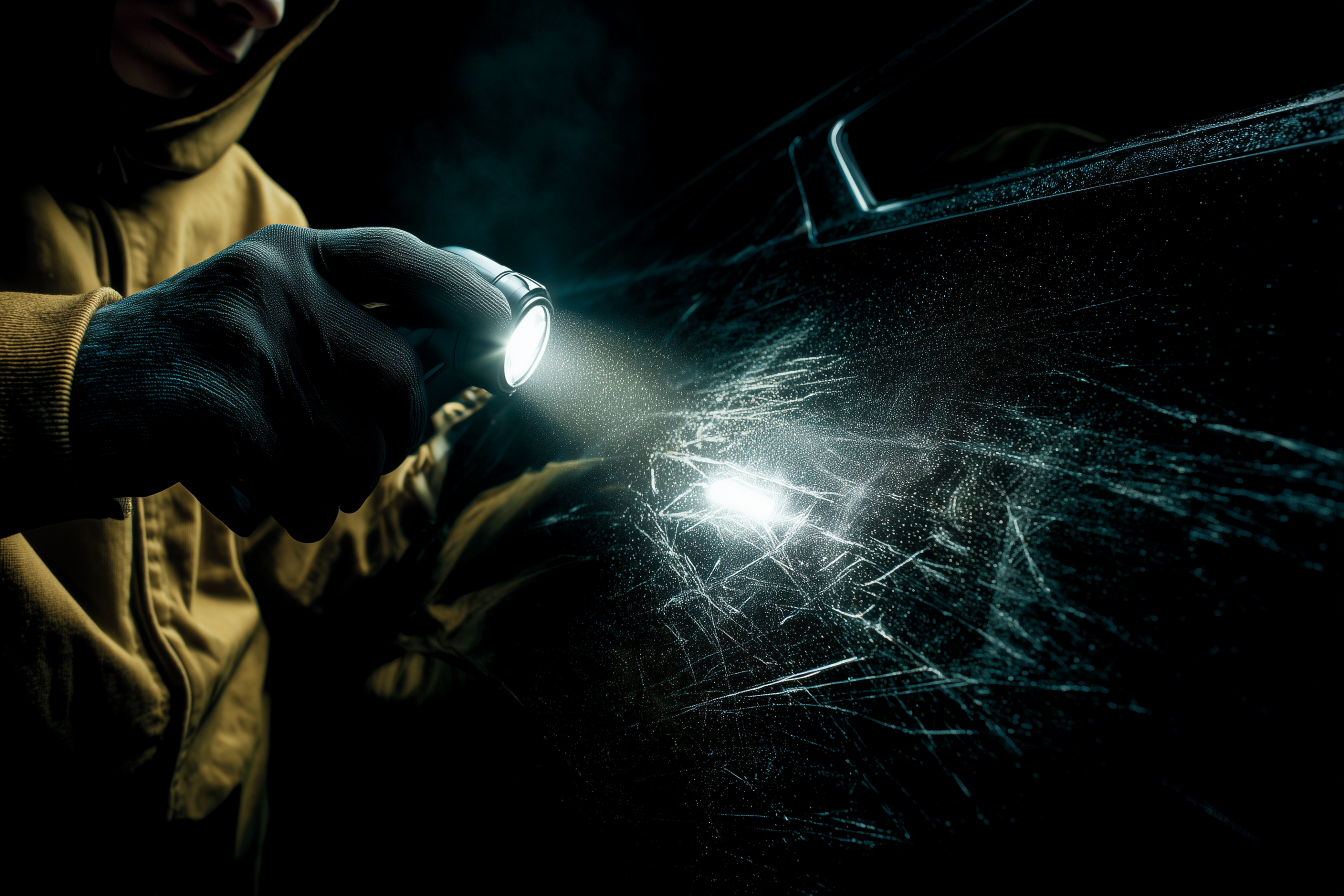
You pull away from the local hand car wash and your car looks great. It’s clean, it’s shiny, and it only cost you £10. But a few hours later, the sun hits the paintwork just right, and you see it. A dense, spiderweb-like pattern of fine scratches covering every panel. Your car’s deep, rich colour now looks hazy and dull.
You are not imagining it. And it is not normal.
That £10 wash inflicted hundreds, if not thousands, of pounds of damage to your vehicle. This article will expose the scientific, financial, and ethical reasons why this happens. More importantly, it will give you the expert knowledge to protect your investment for good.
The Visible Damage: A Web of Scratches
The most common evidence of hand car wash damage is the appearance of “swirl marks.” These are not just surface-level blemishes. They are thousands of microscopic scratches in your car’s clear coat, the protective layer of your paint.
Think of your clear coat like the enamel on your teeth. It’s a hard, protective layer designed to shield the delicate colour coat underneath from UV rays and the elements. When it gets scratched, it diffuses light instead of reflecting it, which is why a swirled car looks dull and hazy. Removing these car wash scratches requires a multi-stage, expert process called professional paint correction, which can often cost upwards of £1000.
The Invisible Attack: Chemicals Stripping Your Defences
What you can’t see is often more damaging. To clean cars quickly, many cheap hand car washes use an aggressive, industrial chemical called Traffic Film Remover (TFR).
This is not a car shampoo. It is a powerful, caustic degreaser designed to strip everything off a surface. While effective at removing traffic film, this traffic film remover paint damage also strips away any wax, sealant, or even a professionally applied ceramic coating you have protecting your paintwork. Without this protective layer, your car’s clear coat is completely exposed to bird droppings, acid rain, and UV radiation, accelerating its decline.
The £10 Car Wash Business Model: Why the Damage is Guaranteed
The damage is not accidental. It is the inevitable result of a business model built entirely on speed and volume, not quality or care.
The Grit-Filled Bucket
The single bucket of murky water used for multiple cars is the primary weapon of paint destruction. Each time a dirty sponge is rinsed, the water becomes a soup of sharp grit and sand. This grit is then dragged all over your car’s paintwork, acting like liquid sandpaper and creating those dense swirl marks from car wash.
The Wrong Tools for the Job
The tools are just as damaging. Large, harsh brushes designed for lorries are often used on delicate paintwork. Sponges trap grit against the surface, and old, poor-quality cloths simply push dirt around, causing even more scratches.
The Unseen Social and Environmental Cost
The question “are car washes bad for paint” often has a darker side. The low price point is frequently only possible through unethical practices. A 2018 UK Parliament’s Environmental Audit Committee report highlighted serious concerns within the industry, linking many unregulated hand car washes to modern slavery and worker exploitation. Furthermore, the caustic TFR and other chemicals are often discharged directly into storm drains, illegally polluting local waterways.
The Solution Part 1: The Professional DIY Method
The safest way to wash a car is to control the process yourself. The ‘Two-Bucket Method’ is the gold standard for a safe, swirl-free wash at home.
- First Bucket (Wash): Fill with clean water and a pH-neutral car shampoo.
- Second Bucket (Rinse): Fill with plain, clean water.
- Grit Guards: Place a grit guard at the bottom of each bucket. This traps the dirt at the bottom, preventing it from getting back into your wash mitt.
- The Process: Wash one panel at a time with a clean microfibre wash mitt. After each panel, rinse the dirty mitt in the Rinse bucket before reloading it with fresh soap from the Wash bucket.
The Solution Part 2: Finding a Safe Car Wash in London
If you don’t have the time or space for a DIY wash, you must find a reputable professional detailer. Before letting anyone touch your car, ask them these critical questions:
- Do you use a two-bucket method with grit guards? (The only acceptable answer is “Yes.”)
- Do you use pH-neutral shampoo and non-caustic chemicals? (They should be able to tell you what they use.)
- Do you use clean, high-quality microfibre wash mitts and drying towels for each vehicle? (This is non-negotiable.)
Answering Your Concerns
“But professional detailing is too expensive.”
A professional maintenance wash costs more than £10, but a full paint correction to fix the damage from a year’s worth of cheap washes costs over £1000. Professional detailing is an investment in preserving your car’s value, not a cost.
“It just takes too much time.”
Our professional maintenance packages are designed for discerning owners who value their time. We bring the studio to your door, delivering a flawless, safe result at your home or workplace with zero disruption to your day.
Your Next Step to a Flawless Finish
You now understand the hidden cost of a cheap car wash. The choice is clear: you can either continue paying to have your investment damaged, or you can invest in preserving its value and appearance.
If you are ready to experience the peace of mind that comes from a truly professional, paint-safe car care programme, we are ready to help.