

The ‘Foisty’ Panic. You open the car door and the smell hits you. It smells like wet dog, stale clothes, or a damp basement. You look down at the footwell or the seatbelt, and you see it: white, fuzzy spores growing on the fabric.
Your instinct is to grab a bottle of white vinegar and a cloth. Do not do it.
Mould is not dirt; it is a biological infestation. If you treat it like a stain, you will make it worse. To kill it, you need heat and extraction, not kitchen condiments.
The Vinegar Trap: Why You Are Making It Worse
| Method | The "Vinegar Hack" (DIY) | Streetcraft Protocol (Professional) |
|---|---|---|
| Mechanism | Acetic Acid (Chemical Burn) | Dry Steam (Thermal Shock) |
| Foam Impact | Soaks Deep (Feeds Roots) | Surface Only (Instant Dry) |
| Material Safety | Risk of Hydrolysis (Sticky Leather) | Safe on All Surfaces |
| Result | Mould Returns + Vinegar Smell | Sterile & Neutral Smell |
Check any car forum and someone will tell you: “Just wipe it with white vinegar.” This is dangerous advice.
- Vinegar Feeds the Roots Household vinegar is roughly 5% acid and 95% water. When you soak a seat with it, the acid might kill the surface fuzz, but the water soaks deep into the foam. You are essentially feeding the deep roots of the mould with a fresh drink of water. Two weeks later, the mould comes back stronger.
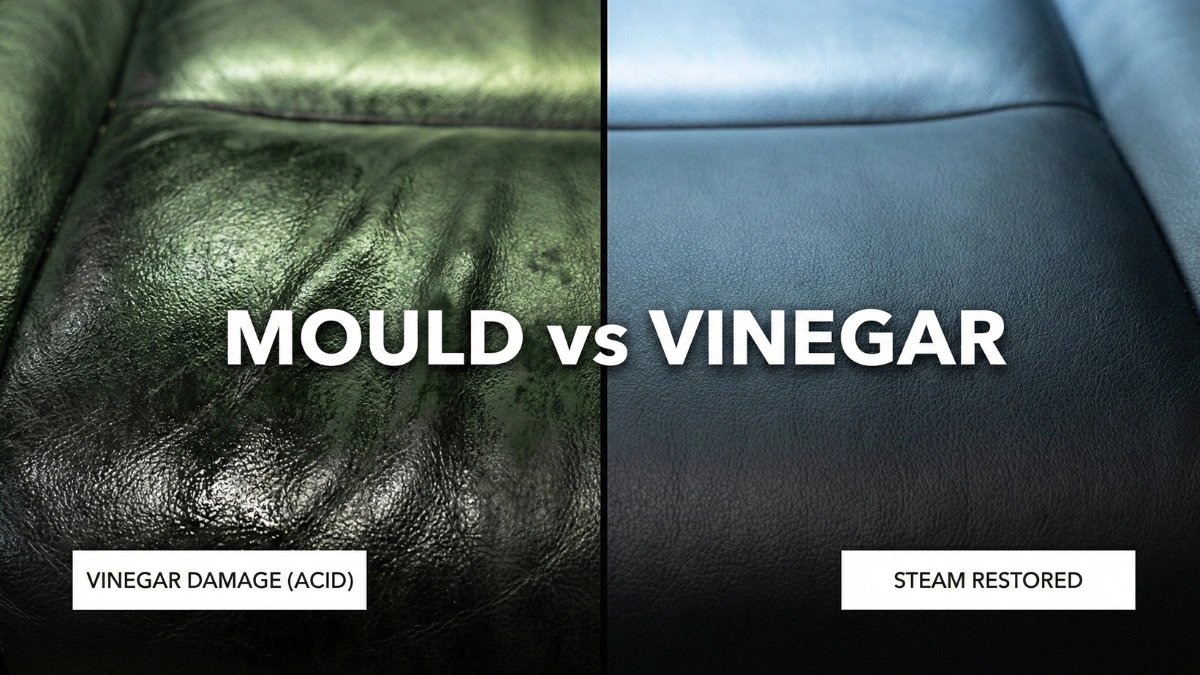
- It Destroys Your Interior Vinegar is acetic acid. If you use it on leather, it causes Hydrolysis. This breaks down the fibre bonds, causing the leather to rot and crack. If you use it on modern “soft-touch” plastics (like dashboard buttons), it can cause them to tackify. It melts the rubber coating, turning your buttons into a sticky mess that never dries.
Phase 1: Diagnosis (Find the Leak First)
You cannot clean your way out of a leak. Mould needs moisture to survive. If you have mould, water is getting in. Before we clean anything, we have to find the breach.
In the UK, the number one cause is the Scuttle Panel. These are the plastic grills under your windscreen. They have drain holes designed to let rain run off. In autumn, these get blocked by rotting leaves and mud. When the drain is blocked, the rainwater fills up the scuttle like a bath and overflows into the cabin filter, dumping gallons of water into your passenger footwell.
Other common leaks:
- Door Membranes: The waterproof sheet inside your door card fails, letting rain run onto the carpet.
- Boot Seals: Check your spare wheel well. Is it a swimming pool?
Phase 2: The Remediation (Steam & Extraction)
Wiping mould is the worst thing you can do. It just spreads the spores into the air, where they land elsewhere. To remove it safely, we use a two-stage thermal process.
- Dry Steam (160°C) We use industrial steam machines. The heat kills the biological spores on contact. Crucially, because it is “Dry Steam,” it does not soak the fabric. It thermally shocks the mould without flooding the foam.
- Hot Water Extraction Once the mould is dead, we need to physically remove it. We use an extraction machine to flush the fabric and suck the dead organic matter out of the seat foam.
FAQ
Why does my car smell of vinegar? If you used vinegar to clean mould, the smell has likely soaked into the sound deadening under the carpet. You will need a professional extraction to flush it out.
Is mould in a car dangerous for babies? Yes. Mould spores are a respiratory irritant. According to the NHS guide on damp and mould, babies and those with asthma are particularly vulnerable.
How do I unblock my scuttle panel drains? You can often clear the leaves by hand, but if the blockage is deep in the pipe, it may need compressed air to clear.
How much does professional mould removal cost? Our Mould Remediation is part of our Deep Clean Package. Prices start from £200 depending on the severity of the infestation.
Stop the Rot
Mould spreads fast. Every day you wait, the spores go deeper into the foam. Stop cleaning, start diagnosing. Let us locate the leak and sterilise the cabin properly.