

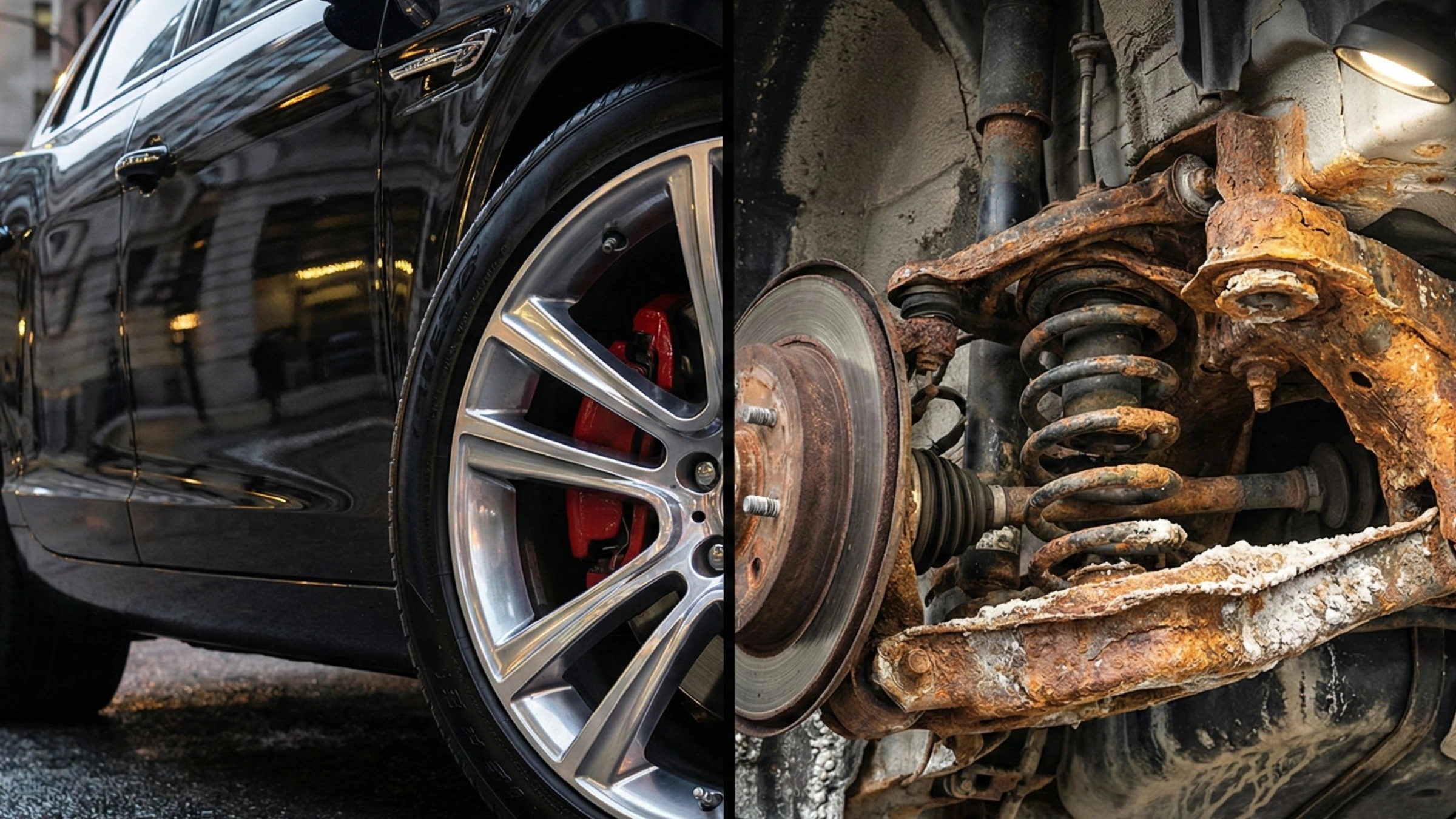
Winter in the UK means one thing for drivers: gritters. While they keep us safe on the ice, the salt they spread is a silent killer for our vehicles.
Most drivers think a quick blast with a pressure washer is enough to fix road salt damage car uk owners face every year. They are wrong.
While your car might look clean on the outside, a chemical reaction is happening underneath that water alone cannot stop. Here is the truth about the invisible rot and how to stop it.
The ‘Hygroscopic’ Threat: Why Your Dry Car is Still Rusting
You park your car in a dry garage. You think it is safe. But the salt is still working.
Road salt is “hygroscopic.” This is a scientific term meaning it acts like a magnet for moisture. As explained by experts, the hygroscopic nature of salt means it actively pulls water from the air.
Even if your car looks dry, the salt residue on your chassis is pulling moisture out of the atmosphere to create a corrosive brine. This salty mixture eats into your metal 24 hours a day, 7 days a week.
The ‘Plastic Trap’: What’s Hiding Behind Your Wheel Arch Liners?
Modern cars look sleek. They use plastic liners in the wheel arches and plastic covers under the engine to keep things tidy and quiet.
But in winter, these plastic covers become traps.
Salty slush gets thrown up by your wheels and forced behind these plastic liners. It gets stuck there. It sits directly against your suspension components and brake lines, festering for months. This is a primary cause of brake pipe corrosion and structural rot that leads to expensive MOT failures.
The Mercedes Lesson: Why ‘Invisible’ Rot is Catastrophic
Do not fall for the trap of thinking this only happens to old, cheap cars. It happens to the best of them.
Recently, owners of high-end vehicles faced a shock when their rear subframes (the main structural support) rotted through from the inside out. In some cases, Mercedes refused to pay for the repairs, leaving owners with bills in the thousands.
The scary part? The cars looked perfect from the outside. The mercedes subframe rust issue proves that “looking clean” is not the same as “being protected.”
Why Water Alone Won’t Remove Road Salt (The Chemistry)
This is the most common myth we need to bust. You cannot just “wash” road salt off with water.
Road salt forms a strong chemical bond with the metal and the road film on your car. A standard jet wash might remove the visible dirt, but it often fails to break that chemical bond.
If you don’t use the right chemistry, you are simply pushing the salt further into the cracks and crevices of your chassis. To truly remove road salt from car undercarriages, you need to change the chemical makeup of the salt itself.
The Solution: Chemical Neutralisation & Deep Flushing
To stop the rot, you need a salt neutraliser for cars.
This is a specialised chemical agent. When applied, it reacts with the road salt and changes its structure. It breaks the corrosive bond and turns the salt into a harmless, soluble substance that can be easily rinsed away.
This is the only way to ensure the corrosion process stops.
Our ‘Deep Clean Package’: The Ultimate Winter Reset
We don’t just wash cars; we save them.
Our Deep Clean Package is designed specifically to handle UK winter conditions. We go further than a standard valet:
- Undercarriage Cleaning: We flush the chassis to remove heavy grit.
- Chemical Neutralisation: We apply a professional-grade salt neutraliser to every inch of the wheel arches and underbody.
- The Flushing: We rinse the neutralised salts away, ensuring the metal is truly clean.
Book Your Deep Clean Package Today
Don’t wait until your mechanic gives you the bad news at your next MOT. Rust doesn’t sleep, and neither should your protection.
The only way to guarantee the removal of this invisible enemy is our specialised Deep Clean Package. It includes the full chemical decontamination required to strip the salt and save your chassis.
Contact us today to Book Your Deep Clean Package and stop the invisible rot in its tracks.