

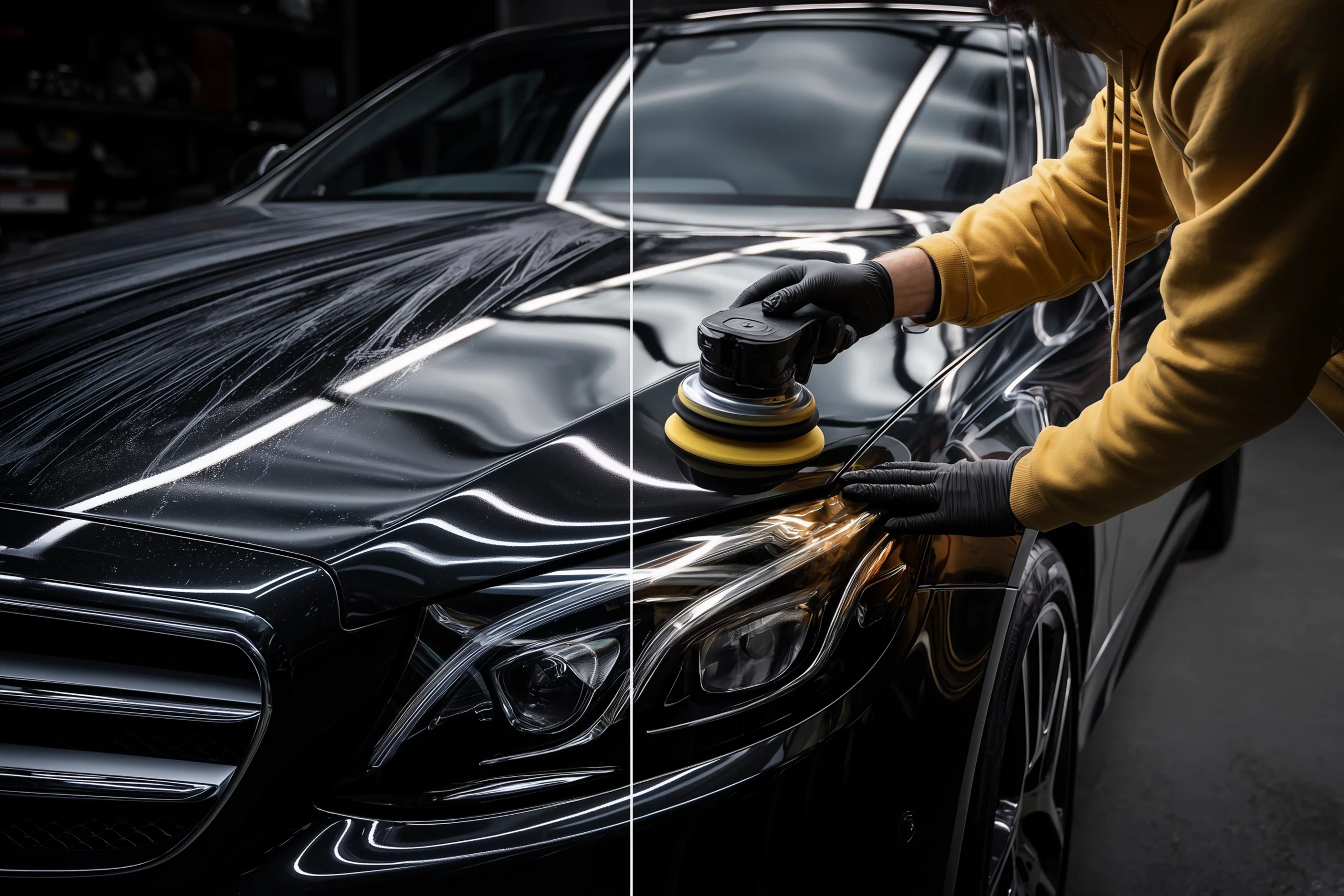
You have seen the damage in the sunlight. A fine web of swirl marks and light scratches that turn your car’s deep, glossy finish into a dull, hazy mess. You know you want it fixed, and you may have heard the term ‘paint correction’. But there is a dangerous misconception that this is just a simple ‘polish’.
It is not.
A professional Stage 2 paint correction is a meticulous, surgical procedure that permanently restores your vehicle’s finish. This is a look behind the curtain into that process. We will show you the immense skill required and the significant risks involved, proving why this is a job left exclusively to the master craftsman.
Step 1: The Assessment – Why We Do Not Guess
Before a single tool touches your car, a thorough diagnosis is essential. An amateur might start polishing immediately. A professional begins with a meticulous assessment.
The process starts with a deep clean and chemical decontamination to remove all bonded contaminants like tar and iron fallout. This reveals the true state of the paintwork. Then, we use the most critical diagnostic tool: a paint depth gauge. This device measures the thickness of your paint and clear coat in microns. This tells us exactly how much clear coat we have to work with, ensuring we can remove defects safely without causing irreversible damage. This is what is two stage paint correction at its core: a process based on measurement, not guesswork.
Step 2: The ‘Cutting’ Stage – Removing the Damage
This is where the heavy lifting happens and is one of the most critical paint correction steps. Using a professional machine polisher and a carefully selected cutting compound and pad, we begin to level the clear coat.
Imagine the swirl marks as microscopic V shaped valleys in your paint’s surface. The cutting stage carefully removes an incredibly thin layer of the clear coat, leveling the surface until the bottom of the deepest scratch is reached. This is how to remove swirl marks permanently. We are not filling them in like a cheap wax. We are permanently removing the damaged layer to reveal a fresh, flawless surface beneath. This is the essence of cutting and polishing car paint.
Step 3: The ‘Refining’ Stage – Creating Flawless Gloss
The cutting stage is effective, but the abrasive compounds used can leave behind their own microscopic haze, dulling the final finish. Step three is all about finesse.
We switch to a much finer refining polish and a softer finishing pad. This process removes the micro marring left by the cutting stage and burnishes the paintwork to an intensely deep, mirror like gloss. The result is a level of clarity and reflection that is often better than when the car left the factory.
The Critical Difference: Expertise vs. Enthusiasm
This is where the real risk lies. In the hands of a professional, a machine polisher is a tool of precision. In the hands of an amateur, it is a weapon of mass destruction for your paintwork.
The most common signs of an amateur job are holograms car paint develops. These are hideous, shimmering buffer trails left in the paint that are often only visible in direct sunlight. They are caused by improper technique and are a clear sign that the ‘detailer’ did not know how to refine the paint correctly.
Worse still is clear coat burn through. An inexperienced operator can easily generate too much heat or be too aggressive, permanently removing the clear coat and exposing the colour coat beneath. This is irreversible damage that can only be fixed by a full panel respray, costing thousands of pounds.
Step 4: Locking In Perfection
After a multi stage correction, the paint is absolutely perfect. It is also completely bare and unprotected. This is the single best moment to preserve that flawless finish. Applying a durable, professional grade ceramic coating at this stage locks in the perfection, protecting the newly restored surface from future damage for years to come.
Is Your Vehicle Ready for a True Restoration?
A Stage 2 paint correction is not a quick polish. It is an intensive restoration process that requires immense skill, specialist tools, and a deep understanding of the risks involved. It is the only way to safely and permanently restore a flawless, better than new finish to your vehicle.
If you are ready to see your car’s true potential, contact our team of certified craftsmen today for a free paint assessment.